.png)
370 results found with an empty search
- 2013PPP1Q30 – Direction of the electric field around a negative charge
Ans: Option A View the video tutorial for the explanation:
- 2021SPp2q8 - Which appliance uses most energy (using P = V^2/R to explain)
Resistors may be connected in series or parallel. When asked which resistor has higher power (hence higher energy), in general we will think of using P = IV. But when using P = IV, it cannot relate to resistance R of the resistors directly. Hence it will be more appropriate for us to P = I^2R or P = V^2/R. For resistors in series , the current is the same. Hence it will be more direct to compare P and R using P = I^2R , where P is directly proportional to R . For resistors in parallel , the p.d. is the same. Hence it will be more direct to compare P and R using P = V^2/R , where P is inversely proportional to R .
- Understanding cathode-ray oscilloscope CRO
Refer to the notes below together with the video to learn more about the CRO Videos
- Interpreting distance-time graph and speed-time graph
Think of gradient as the steepness of a slope as you climb to the right (as time increases). 1) If it is getting steeper > increasing gradient 2) If it is getting less steep > decrease gradient 3) If it is flat > no/zero gradient For distance-time graph , gradient represents the speed . For speed-time graph , gradient represents the acceleration .
- Scalar and Vector Quantities
Scalar quantity is a quantity with magnitude but no direction. Vector quantity is a quantity with both magnitude and direction .
- Graphs of Transverse Wave
Transverse waves are waves in which travel perpendicular to the direction of vibration of particles.
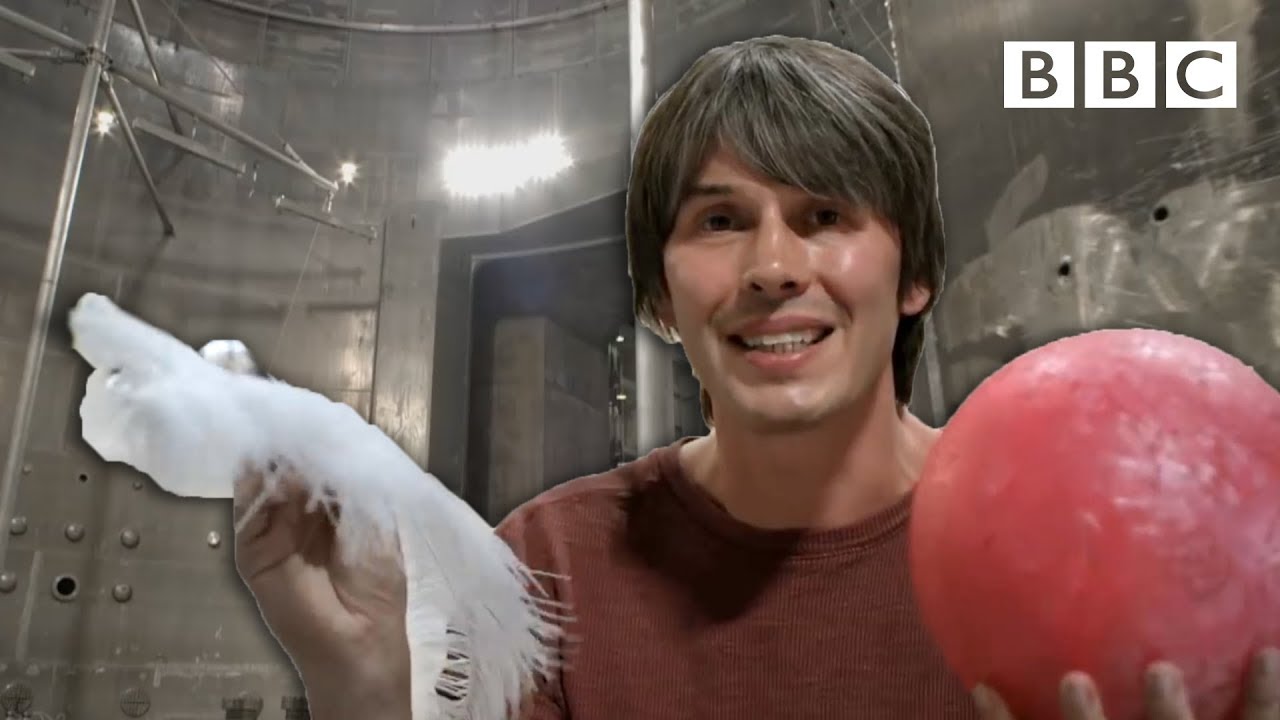
- Bowling ball and feather in a vacuum room – which drops faster?
In a vacuum room, where is no air resistance, the bowling ball will have the same acceleration as the feather, which is 10 m/s2 on earth. Hence both will have the same speed at any time and reach the floor at the same time. In vacuum, the speed-time graph for both objects will be the same, i.e. straight line, start from origin and with a constant gradient (constant acceleration) of 10 ms-2 due to free-fall acceleration due to gravity.